
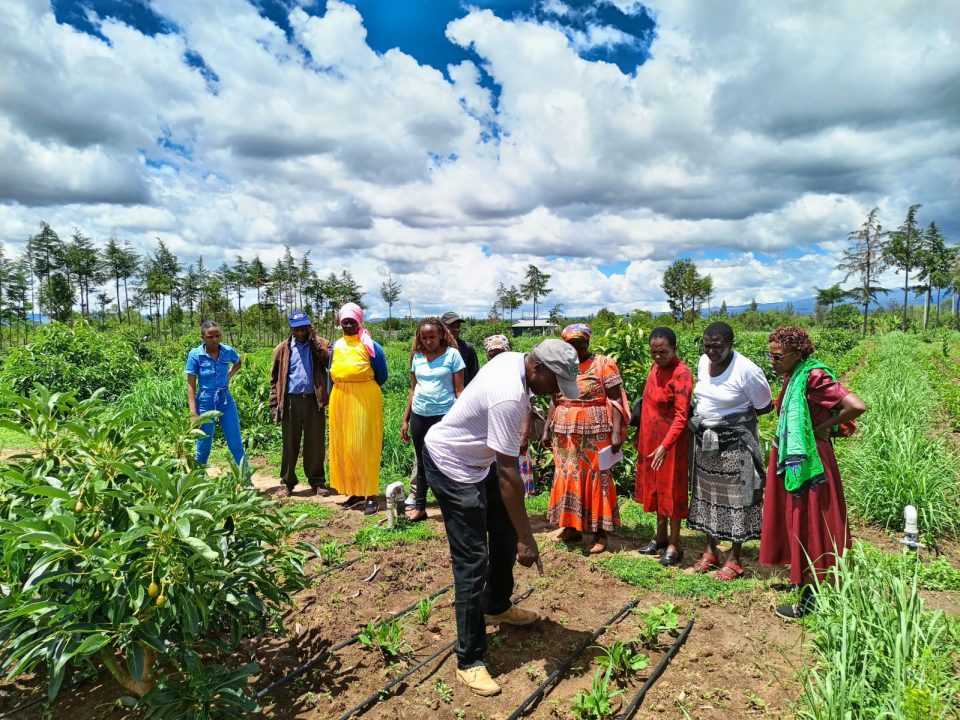
In Kajiado County, more than 700 farmers have gained valuable training in climate-smart agriculture, thanks to the Safaricom Foundation’s Wezesha Agri-Programme. This program, a collaboration involving Kajiado County, Africa Instore Solutions (AIS), Endev, and Safaricom’s Digifarm, focuses on empowering young farmers through climate-smart agriculture training and creating agribusiness opportunities.
Joseph Ogutu, Chairman of the Safaricom Foundation, revealed that the 18-month program received funding totaling Sh23 million. This comprehensive initiative not only provides training in Good Agricultural Practices (GAP) through demo farm initiatives but also equips farmers with entrepreneurial skills. Moreover, it involves mentoring young farmers in agricultural technology and innovation and establishes markets for their products through partnerships.
The Wezesha Agri program has set up a demonstration farm in Kuku Ward within Kajiado South subcounty, aiming to support and empower 1000 women and youth through capacity development. Farmers receive practical agricultural training, introducing them to climate-smart technologies and innovations for income generation opportunities. To date, over 1800 farmers have received training at the demo farm.
In its 2023-2026 strategy, Safaricom Foundation has incorporated agribusiness, enterprise development, and ecopreneurship as key components of its economic empowerment programs. Additionally, the program aims to train women and youth on good agricultural practices and create employment opportunities for at least 100,000 young people.
This initiative is vital in Kenya, where farmers grapple with the impacts of climate change. Researchers at the Kenya Agricultural and Livestock Research Organization (Kalro) have developed climate-smart technologies, such as drought-resistant fodder and high-quality animal breeds, to help farmers cope with climate shocks.
The Wezesha Agri-Programme exemplifies the ambition to integrate agricultural development and climate responsiveness, aiming to achieve food security and broader development goals while minimizing greenhouse gas emissions.
Kenya’s Ministry of Agriculture has explored innovative measures to address climate change challenges, including the Kenya Climate Smart Agriculture Implementation Framework (KCSAIF), which envisions a climate-resilient, low-carbon growth sustainable agriculture contributing to national development goals.”
