
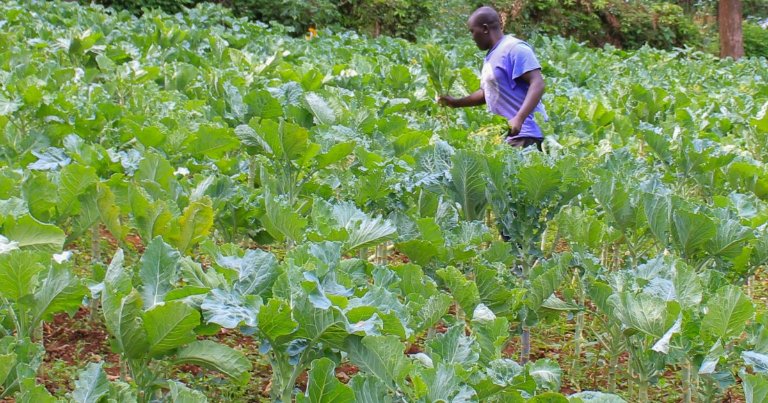
In the coming years, farmers in Bungoma County are set to gain from a substantial agriculture project worth Sh95 billion, aimed at enhancing productivity and improving livelihoods.
The Kenya Livestock Commercialization Project (KeLCoP), funded by the government of Kenya and the International Fund for Agricultural Development (IFAD), aims to eradicate poverty and strengthen food security, particularly among rural communities.
Addressing attendees at the Mabanga Agriculture Training Centre (ATC), Rose Khisa, the KeLCoP County Coordinator, highlighted that Bungoma is among ten fortunate counties selected to benefit from this project, which targets various ecological zones.
Khisa emphasized that one of the activities under the project’s second component was the recent investor forum held in Bungoma County.
“The purpose of the investor forum was to engage investors along the value chains,” she explained.
The coordinator outlined that the project will primarily focus on enhancing poultry, sheep, goat, dairy, beef farming, and the beekeeping value chain, among others.
“We have engaged input suppliers, service providers, and financial institutions to support our farmers. The project aims to reach over 8,000 small-scale farmers in Bungoma,” she stated.
She further highlighted that the project primarily targets vulnerable groups, including the ultra-poor, people living with disabilities, indigenous groups such as the Ogiek from Mt Elgon, and the youth. Notably, women make up 54 percent of the targeted group, reflecting the project’s emphasis on inclusivity and empowerment.
Khisa explained that providing chickens to farmers will have a significant impact on the nutrition of the project’s beneficiaries.
“Chickens have advantages over dairy farming as they require less space and are easier to feed,” she affirmed.
Khisa also emphasized that women and youth can easily manage small livestock.
The project consists of three interconnected components: production, marketing, and project coordination. It aims to uplift small-scale farmers in the region, enabling them to generate income and improve their livelihoods.
Additionally, the program prioritizes nutrition, with goat milk being highlighted as a suitable alternative when breastfeeding mothers face health complications.
Monica Fedha, the Bungoma County CECM for Agriculture, expressed her belief that the six-year project will significantly contribute to the county’s agricultural transformation agenda by increasing income, food security, and nutrition among rural small-scale farmers.
