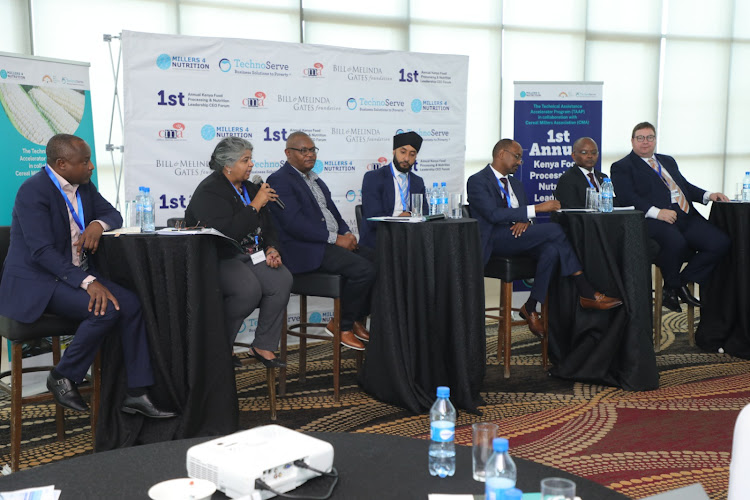
The Cereal Millers Association (CMA) of Kenya has partnered with the international non-profit organization TechnoServe to launch a food fortification index, aiming to address the issue of malnutrition in the country. The index, known as the Kenya Millers Fortification Index (KMFI), is designed to encourage local flour millers to produce nutritious and properly fortified food products. The initiative is expected to expand to include other staple foods as well.
The KMFI evaluates companies based on a self-evaluation tool, insights from an independent expert group, and product quality testing that assesses fortification and aflatoxin levels according to national standards. The index rankings will provide compliance ratings, highlighting the efforts made by companies to fortify their products, and will also support regulatory effectiveness.
Additionally, the KMFI rankings will serve as the foundation for an award scheme that recognizes fortification compliance, incremental process improvements, and innovations in quality management.
The CMA represents a significant portion of the milling capacity in Kenya, accounting for approximately 40% of maize milling capacity and over 90% of wheat milling capacity.
The KMFI was officially launched at the inaugural Annual Kenya Food Processing and Nutrition Leadership Forum, which brought together stakeholders from the private sector, government, and civil society to emphasize the role of millers in promoting nutrition and addressing common challenges.
Paloma Fernandes, CEO of CMA, emphasized the importance of involving regulators and consumers in scaling up fortification efforts and the KMFI, stating that increased demand for nutritious food is crucial.
Food fortification on a large scale involves intentionally increasing the content of essential micronutrients, such as vitamins and minerals, in widely consumed staple foods.
The Kenya National Food Fortification Alliance was established in 2005 to lead planning, implementation, and monitoring of fortification initiatives in the country. The alliance comprises representatives from the Ministry of Health, Kenya Bureau of Standards, research institutions, UN agencies, development partners, and umbrella bodies from the cereal millers, salt, and oil industries.
In 2012, fortification standards were established, and legislation was enacted to make fortification of maize, wheat, and oil mandatory.
Efforts in food fortification have shown positive results, as indicated by the Kenya Demographic Health Survey (KDHS, 2022). The prevalence of stunting decreased from 26% in 2014 to 18% in 2022, partly attributed to these fortification initiatives.
